
Choosing countertops is one of the most consequential decisions in a kitchen remodel. Countertops occupy a large visual area, handle constant daily use, and influence everything from cabinetry and backsplash selections to lighting and flooring. Two materials consistently rise to the top of the conversation: quartz and granite.
At Exquisitely Renovated LLC, we approach countertop selection as part of the complete kitchen design rather than an isolated material choice. Through our kitchen remodeling services in Maryland and Washington, D.C., we help homeowners consider appearance, maintenance, durability, installation requirements, and the way each surface will support everyday routines.
Quartz and granite can each create an elegant, long-lasting kitchen. Their differences, however, become significant once you consider how the kitchen will be used. Understanding those differences can help you invest in a countertop that looks beautiful on installation day and continues to perform years later.
What Is the Difference Between Quartz and Granite Countertops?
Granite is a natural stone quarried from the earth, cut into slabs, polished, and fabricated for installation. Each slab carries mineral deposits, veining, speckles, color shifts, and other characteristics created naturally. No two slabs are precisely identical, which is a major part of granite’s appeal.
Quartz countertops are engineered surfaces. They are generally made using natural quartz minerals combined with resins, pigments, and other materials. Manufacturing allows greater control over color, pattern, and consistency, giving homeowners a broad selection of finishes.
This distinction affects more than appearance. It influences maintenance, heat resistance, stain resistance, design consistency, and the amount of variation homeowners should expect from the finished installation.
Appearance and Design Flexibility
Granite has an unmistakably organic appearance. Depending on the slab, its surface may feature subtle mineral movement or dramatic veins and contrasting colors. Homeowners who appreciate natural materials often enjoy selecting an individual slab because they can see the exact markings that will become part of their kitchen.
Granite works beautifully with many kitchen styles. A soft white or gray slab can complement clean contemporary cabinetry, while deeper browns, blacks, and richly patterned stone can bring warmth to traditional interiors. The natural movement can also make a large kitchen island a striking visual centerpiece.
Quartz provides a more controlled design experience. Manufacturers can create surfaces with understated patterns, nearly solid colors, or veining inspired by marble and other natural stones. This makes quartz especially useful when the design calls for consistency across long countertop runs, islands, waterfall edges, or multiple work areas.
The right choice often comes down to the character you want the room to express. Granite celebrates natural variation, while quartz offers greater predictability in color and pattern placement.
Durability in a Busy Kitchen
Kitchen countertops encounter dropped utensils, heavy cookware, spills, food preparation, appliances, and constant cleaning. Material performance should carry as much weight as appearance when planning a remodel.
Granite is a hard natural stone with excellent durability when properly fabricated, installed, and maintained. It can stand up well to normal household activity, though edges may chip if struck forcefully by a heavy object. Natural fissures and characteristics within a particular slab should also be considered during fabrication.
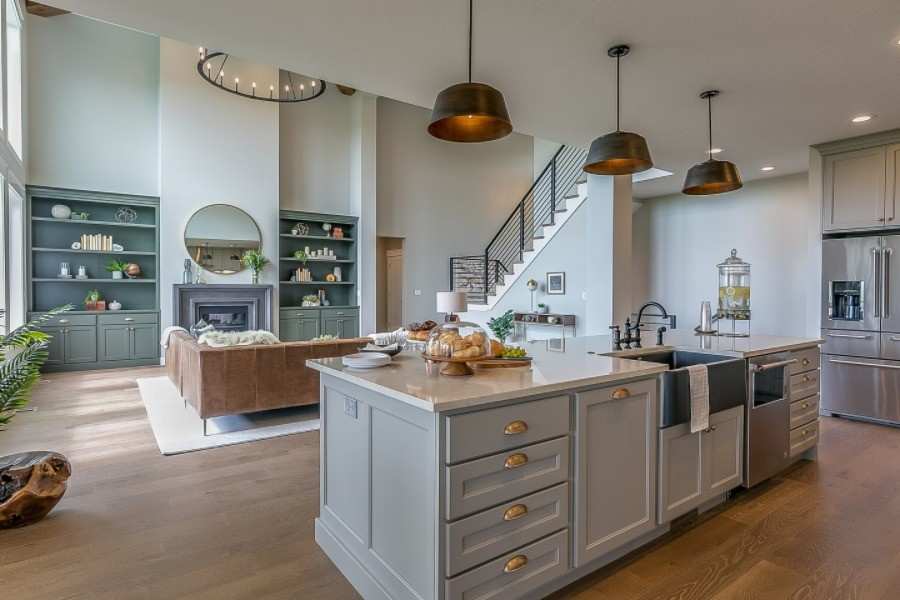
Quartz is also highly durable and performs exceptionally well in active kitchens. Its engineered construction creates a hard, nonporous surface that resists many common stains and does not require routine sealing. Heavy impacts can still damage an edge, so quartz should never be treated as indestructible.
Professional fabrication and installation matter with either material. Proper cabinet support, accurate measurements, carefully planned seams, sink cutouts, and secure installation all contribute to the countertop’s long-term performance.
Maintenance and Stain Resistance
Maintenance is one of the strongest reasons homeowners choose quartz. Since quartz is nonporous, liquids do not penetrate it as readily as they can penetrate some natural stone surfaces. Everyday cleaning is generally straightforward, using mild soap, water, and products approved by the manufacturer.
Granite requires slightly more attention. Because it is natural stone, many granite countertops benefit from periodic sealing to help protect against moisture and staining. Sealing frequency depends on the specific stone, sealer, usage, and care practices.
Spills should still be cleaned promptly on either surface. Cooking oils, deeply colored foods, harsh chemicals, and abrasive cleaners can create unnecessary risks. Following the fabricator’s or manufacturer’s care instructions is a simple way to protect the finish.
For households that place a high priority on low maintenance, quartz often has an advantage. Homeowners comfortable with occasional stone care may find granite equally satisfying.
Heat Resistance and Cooking Habits
Granite performs very well around heat and is generally more heat resistant than engineered quartz. Its natural stone composition makes it suitable for kitchens where frequent cooking and hot cookware are part of daily life. Using trivets is still a sensible habit because it protects the countertop finish and reduces unnecessary thermal stress.
Quartz contains resins that can be affected by excessive heat. Placing a hot pan directly from the cooktop or oven onto the surface may cause discoloration or damage. Manufacturers commonly recommend using trivets or heat-resistant pads.
This difference may sound minor, but everyday habits matter. A household that cooks frequently should consider how naturally everyone will follow countertop care requirements.
Countertop selection works best when it reflects real routines rather than an idealized version of how the kitchen might be used.
Which Countertop Offers Better Stain Protection?
Quartz generally offers stronger resistance to staining because its surface is nonporous. Coffee, sauces, juice, and other common kitchen substances are less likely to penetrate the material when spills are addressed appropriately.
Granite can also resist stains effectively when it has been properly sealed. The porosity of natural stone can vary, however, so care requirements may differ between slabs. Lighter stones may also make certain marks more noticeable.
Neither surface should be considered completely stain-proof. Prompt cleanup and appropriate cleaning products remain important with any premium countertop material.
For families with children, frequent entertainers, or households that use the kitchen heavily throughout the day, quartz’s lower-maintenance surface can provide added peace of mind.
Cost of Quartz vs. Granite Countertops
There is no universal answer to which material costs less. Pricing for quartz and granite varies significantly according to brand, slab selection, color, thickness, edge profile, fabrication requirements, project size, and installation complexity.
Some granite varieties can be relatively accessible, while rare or highly distinctive slabs can command premium prices. Quartz pricing can also range considerably, particularly for designer collections with detailed veining or specialized finishes.

Homeowners should look beyond the slab price when comparing estimates. Sink and cooktop cutouts, backsplashes, edge treatments, seams, removal of existing countertops, transportation, and installation can all affect the completed cost.
The strongest value comes from choosing a material that fits the design, budget, maintenance expectations, and expected years of use. Selecting solely by the lowest initial price can lead to compromises elsewhere in the remodel.
How Countertops Affect the Rest of a Kitchen Remodel
Countertops rarely succeed as a standalone design decision. Their color, pattern, thickness, and edge profile interact closely with cabinets, hardware, backsplash tile, flooring, fixtures, and lighting.
A heavily veined countertop may look best beside quieter cabinetry and backsplash materials. A restrained quartz surface can give homeowners greater freedom to introduce color or texture elsewhere. Granite with warm mineral tones may help connect wood cabinetry with flooring and metallic finishes.
Lighting deserves special attention. Natural stone and engineered quartz can appear different under daylight, recessed lighting, pendants, and under-cabinet fixtures. Samples should be evaluated alongside the actual cabinet and flooring selections whenever possible.
Planning these elements together produces a kitchen that feels intentional rather than assembled from individually attractive products.
Quartz or Granite: Which Is Better for Your Kitchen?
Quartz may be the stronger fit for homeowners who value low maintenance, consistent coloring, strong stain resistance, and a wide selection of controlled patterns. It is particularly appealing in kitchens where ease of care is a major priority.
Granite may be preferable for homeowners drawn to authentic natural stone, one-of-a-kind patterning, and excellent heat resistance. Each slab has its own visual identity, giving the finished kitchen a character that cannot be replicated exactly.
Neither material is automatically superior. The better countertop is the one that supports the household’s cooking habits, maintenance preferences, design goals, and budget.
Making a Countertop Decision That Lasts
A kitchen remodel should feel considered from the largest architectural choices down to the smallest finish details. Countertops sit at the center of that experience, serving as a work surface every day and as one of the room’s defining visual features.
Quartz offers consistency, easy care, and extensive design flexibility. Granite provides natural individuality, durability, and excellent resistance to heat. Each can deliver years of beauty when properly selected, fabricated, installed, and maintained.
Choosing between quartz and granite becomes much easier when the decision is grounded in daily use, desired aesthetics, maintenance expectations, and the complete kitchen design. With thoughtful planning and skilled installation, either material can become a lasting foundation for a kitchen that feels refined, comfortable, and distinctly yours.
Learn more about how to get started: